The solar energy industry in India is growing at a tremendous rate as various enterprises and industries are increasingly investing in solar energy. But keeping the energy production at its peak level calls for frequent inspections of the facilities to uncover any potential faults that can prove very costly later on. The conventional means of inspection can be time-consuming, costly, and incapable of detecting the thermal anomalies at an early stage.
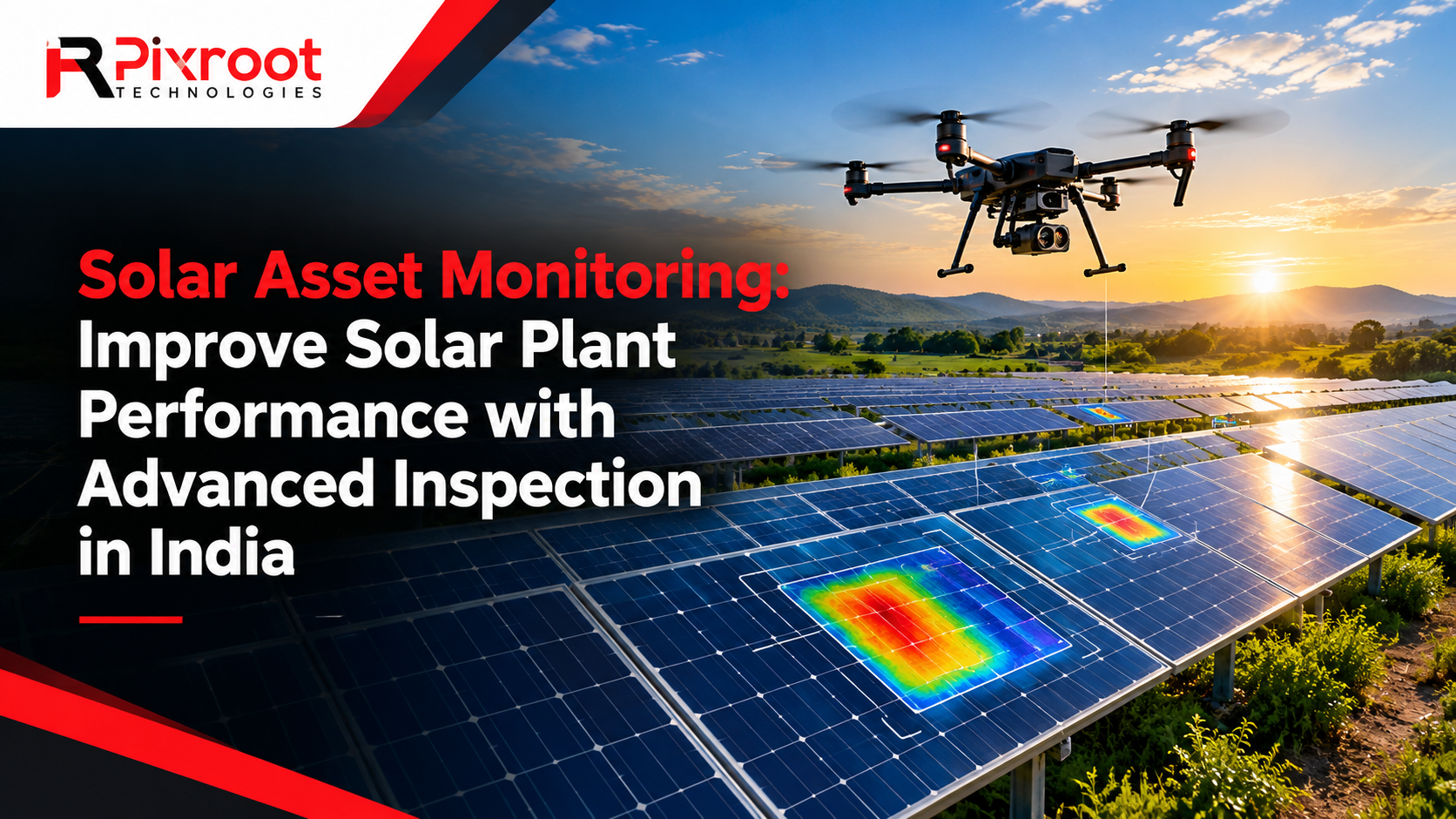
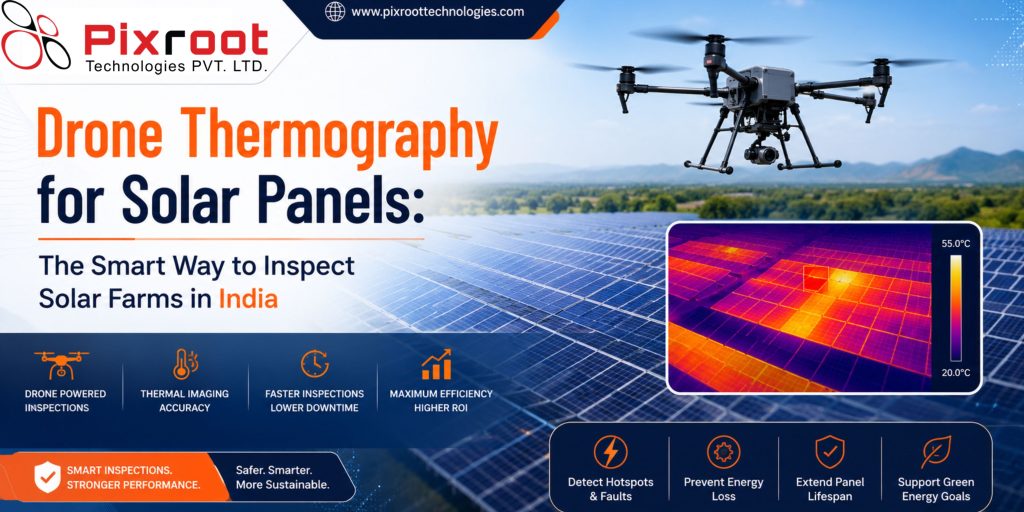
Drone Thermography for Solar Panels is a highly effective technique to conduct preventative maintenance checks on solar panel facilities.
By using advanced thermal imaging along with the aerial surveys, operators can identify any faults and deficiencies of their panels.
At Pixroot Technologies, we offer professional Drone Inspection Services for Solar Farms across India using industry standard thermal cameras and certified drone pilots to help increase the efficiency and reduce the downtime.
What is Drone Thermography for Solar Panels?
Drone thermography for solar panels is an inspection technique in which the drones carrying thermal infrared cameras take the temperature readings of photovoltaic (PV) modules installed in a solar farm.
Unlike the visual inspection, thermal imaging reveals various defects that cannot be detected by the naked eye, including:
• Hotspots
• Cracked solar cells
• Faulty bypass diodes
• Loose electrical connections
• Damaged strings
• Soiling
• Moisture
• Delamination
Such faults lower the power generation capabilities of solar panels.
Advantages of Drone Inspection Compared to Manual Inspection of Solar Farms
Coverage Speed
Thousands of panels are located on hundreds of acres in large solar farms, which can be inspected in just hours, not days.
Fault Detection Accuracy
The thermal sensors identify even minute temperature variations enabling the detection of hidden problems before the appearance of any visible damage.
Increased Safety
There is no need for technicians to walk through huge installations or climb elevated structures.
Cost Savings
The early detection of problems will prevent any equipment failures and losses in production.
Minimum Down Time
Drone inspections can take place when most of solar systems are still operating and producing electricity.
Process of Drone Thermography of Solar Panels
Flight Planning
Certified drone pilots design an automatic flight plan to provide full inspection of the solar installation.
Collection of Thermal Images
High-end infrared cameras collect thousands of thermal images during the flight.
Visual Imagery Collection
RGB cameras simultaneously record high-resolution visual images to compare.
AI-based Data Processing
Special software recognizes anomalies in temperatures and faulty panels.
Report
Full report provided to our clients includes:
• Thermal images
• Fault locations
• Geographic coordinates
• Type of defect
• Recommendations for repair
• Performance Analysis
Problems Identified by Thermal Inspections via Drones in Solar Farming
The drone thermography is useful in detecting a range of issues, including:
Hot Spots
Local heating causes loss in energy output and irreparable damage to solar cells.
Broken Solar Cells
Injuries lead to irregular temperatures and can be easily spotted using thermal inspection.
Faulty Connectors
Low-quality connections between wires cause heating and inefficiency.
Problems with Inverters
Thermal inspection allows recognizing abnormal heat distribution near inverters.
Soiling on Solar Panels
Accumulation of dust causes uneven heating and reduces the amount of energy generated.
Issues With Strings of Solar Panels
The string of solar panels is performing below its usual capacity due to electrical issues.
Advantages of Drone Inspection for Solar Fields
More Energy Generated
Through inspections, faulty parts are detected thus increasing energy production.
Low Maintenance Costs
Through inspections, you can avoid expensive repairs.
Longer Life Span of Equipment
Identification of defects through inspection increases the lifespan of solar panels.
Greater Return on Investments
Good maintenance helps to get the maximum possible return on investments.
Efficient Decision-Making
Inspection reports allow making efficient decisions quickly.
Sectors That Would Benefit from Drone Solar Panel Thermography
Drone Solar Panel Thermography is useful for:
• Utility-scale solar farms
• Roof-top commercial solar systems
• Industrial solar stations
• Government renewable energy projects
• Independent power producers
• EPC contractors
• Solar O&M companies
• Educational institutions
• Manufacturing facilities
Why Choose Pixroot Technologies?
Pixroot Technologies offers efficient drone inspection solutions that are customized for fast-growing renewable energy industry in India.
Our benefits include:
• Drones operated according to DGCA rules
• Professional drone pilots
• Termal cameras of high resolution
• Advanced image processing
• Quick implementation of projects
• Accurate inspection reports
• Service across all India
• Tailored inspection solutions
With our assistance, you can increase your efficiency in maintaining photovoltaic plants while lowering the expenses on maintenance.
What is Drone Thermography for Solar Panels?
This technology involves the use of drones with infrared thermal cameras in order to conduct an inspection of photovoltaic systems. With the help of this method, one can discover such things as hotspots, damage to the cells and wiring and any temperature abnormalities that will affect the performance of the system.
Why Thermal Drone Inspection Is Necessary for the Indian Solar Industry
India keeps developing its capacity in terms of solar power under the plans of achieving its renewable energy targets. As the solar farms get larger, the inspections of such facilities become less efficient.
With the help of drones, one can efficiently control thousands of solar panels in order to make sure that everything works well.
FAQs
How often should solar plants be inspected using drones?
Solar plants typically require thermal drone inspections every 6 to 12 months along with inspections post any adverse weather conditions or maintenance.
Can drones find faulty solar panels?
Yes. The thermal camera detects hotspots, damaged solar panels, malfunctioning bypass diodes, poor electrical connections and other solar panel defects which cannot be detected during normal visual inspections.
Is thermal drone inspection more precise than manual inspection?
Yes. Drone inspections of a larger area can be done within less time as compared to the traditional manual inspection method.
Will there be any decrease in maintenance costs due to thermal drone inspection?
Definitely. Faults can be detected early to prevent equipment failure and minimize downtime.
Why Choose Pixroot Technologies for Thermographic Drone Survey in India?
Pixroot Technologies provides solar plant surveying using certified drones, thermal imagery, comprehensive reports, and nation-wide service in India.