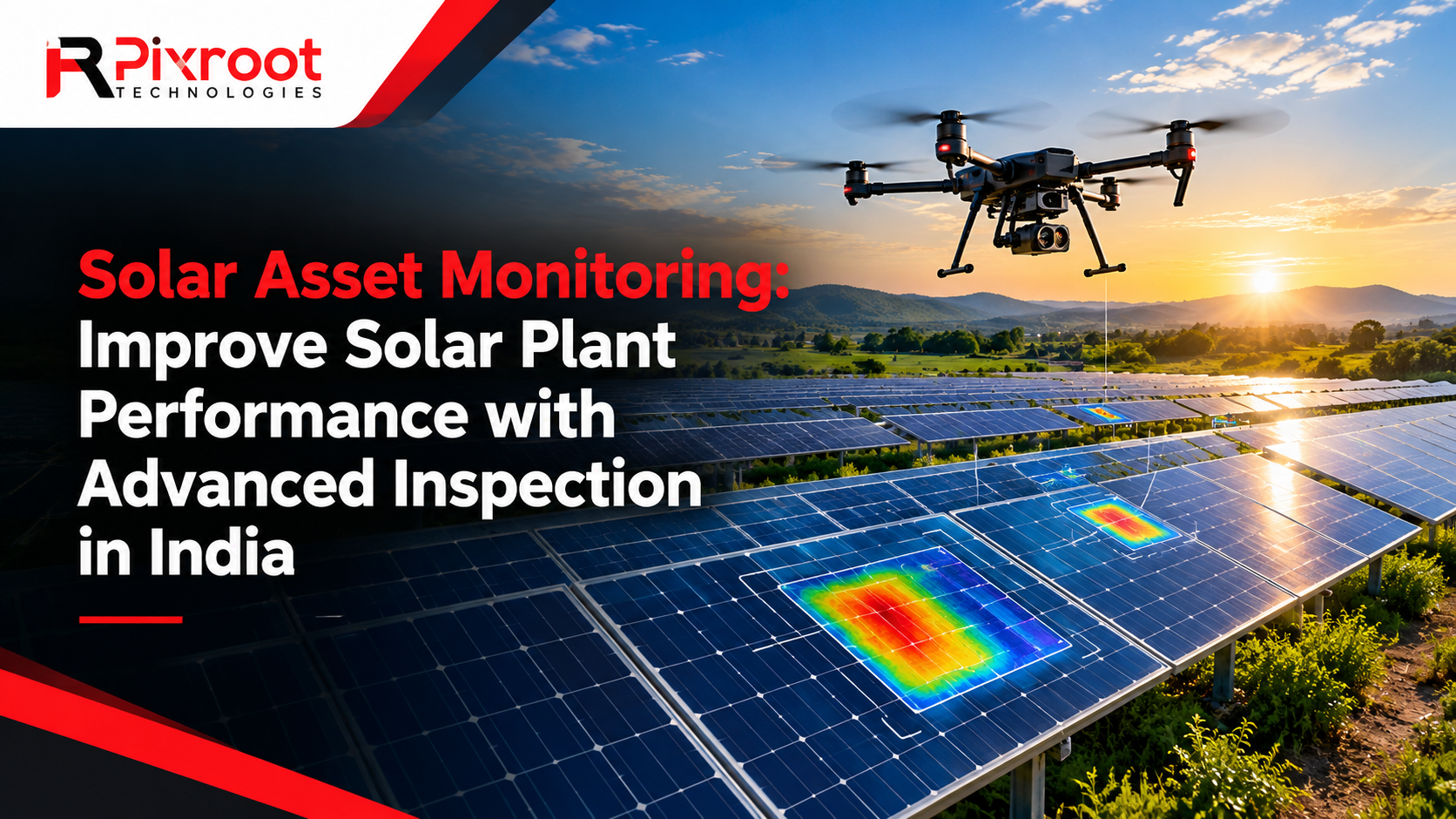
Businesses, industries and renewable energy developers all over India can invest in solar power plants. However, the energy generation can be impacted by dust accumulation, damage to solar modules, hotspots, shading and electrical faults if they remain undetected. Solar Asset Monitoring allows plant owners to understand asset conditions, identify performance anomalies and plan maintenance more efficiently.
Pixroot Technologies offers drone-based inspection and monitoring solutions that combine aerial imagery, thermal inspection and data-driven analysis to enable solar asset management. Operators can use these technologies to inspect large solar installations efficiently and to find potential defects, allowing them to make maintenance decisions based on well-informed data.
What is Solar Asset Management
Solar Asset Monitoring is the assessment of solar plant performance, equipment condition and potential faults by means of monitoring data, visual inspections and diagnostic technologies. It helps operators detect abnormalities, investigate energy losses and maintain reliable plant operations.
In India’s solar power projects, monitoring can be particularly useful in areas where dust, high temperatures, seasonal weather and large installation areas create persistent maintenance challenges.
Monitoring can include drone-based thermal imaging, high-resolution photography, solar module inspections, asset mapping and inspection reporting, as required by the project.
The value of inspecting solar plants Routine inspections of solar plants can help prevent problems from becoming bigger operational issues. Traditional manual inspections of large solar farms can be time-consuming and require physical access.
Drone-assisted inspections offer a practical means to acquire aerial data across large panel arrays and minimise the need for staff to work in hard-to-reach locations.
Major benefits include:
Early fault detection: Identification of potential hot spots, visible module damage and other abnormality.
- More inspection coverage: Fast image large solar plants.
- Better maintenance planning: Focus on areas requiring more detailed review or corrective activity.
- Minimized inspection effort: Minimize manual repetitive surveys where aerial inspection is applicable.
- Digital documentation: Take visual images to help with maintenance decisions and future comparisons.
Where electrical testing or physical measurement is required, qualified personnel shall verify inspection findings.
How drone technology is helping monitor solar assets Drone technology is being used in new ways to collect inspection data by solar operators. Drones with proper RGB cameras and thermal cameras can capture high resolution images to help in detecting visible flaws and abnormal temperature patterns.
1. Hot spot detection with thermal imaging
Thermal imaging is used to identify abnormal temperature differences on solar modules. Hot spots may indicate defects, electrical problems, shading or other conditions that may need to be investigated.
2. Check solar panels in high resolution
RGB cameras are used to record visible surface conditions such as cracks, damaged components, debris and other observable anomalies. The images provide useful context for interpretation of thermal findings.
3. Asset Records and Aerial Mapping
Drone mapping provides a detailed visualization of the layout of solar plants. Mapping, coupled with the correct GIS data and asset records, assists teams in pinpointing the location of inspection findings and planning maintenance activities.
4. Inspection Reports and Maintenance Schedules
Organised inspection reports help asset owners know what issues have been found, where they are located and what the next steps are recommended to be. Also, comparing inspection records over time can assist in maintenance planning and asset condition assessment.
Pixroot Technologies highlights drone-based solar inspection, thermal and RGB imaging, hotspot detection, aerial mapping and visual reporting as part of its solar inspection offerings.
Indian Solar Inspection Services
Solar plants operate in different environmental and operational conditions in countries like India. Dust exposure, high ambient temperatures, seasonal rainfall, and shading can all impact inspection priorities.
A well-designed solar plant inspection programme can assist utility scale solar farms, commercial installations, industrial solar facilities and other projects that require systematic asset assessment.
The scope of the inspection shall be in proportion to plant capacity, site conditions, equipment configuration and the operational objectives of the owner. Drone imagery can supplement inverter monitoring, electrical testing and routine maintenance, but not replace them.
If you are a business looking to improve your solar asset management, Pixroot Technologies has technology-driven inspection solutions to help you make better operational decisions.
Important Points
- Solar Asset Monitoring allows for the identification of potential performance issues and supports proactive maintenance.
- Thermal imaging on drones can identify abnormal temperature patterns for further investigation.
- High resolution imagery, aerial mapping enhances visual documentation of solar installations.
- Routine solar plant inspections enable maintenance planning and long term asset management.
- Combining inspection results with operational data creates a clearer view of the status of a solar plant.
FAQ
What is the goal of Solar Asset Monitoring?
Solar asset monitoring helps to assess the condition of solar equipment, identify faults, analyse underperformance and maintenance decisions based on inspection results and operational data.
What is Solar Plant Inspection via Drone?
A drone captures aerial imagery and, when relevant, thermal data across solar panel arrays. The information collected is searched for anomalies and the locations recorded and the results compiled for further investigation.
Can thermal imaging spot faults in solar panels?
Thermal imaging can detect abnormal temperature patterns related to some module defects and electrical problems. Results depend on inspection conditions, equipment used and quality of analysis. Suspect faults may require further testing.
What is the frequency of inspection of a solar plant?
The frequency of inspection is a function of plant size, operating conditions, manufacturer’s recommendations, maintenance requirements and observed performance. Assets can be kept visible through periodic inspections and further assessment when faults are suspected.
Asset monitoring can be used for the following solar projects:
Monitoring and inspection programs tailored to the equipment and operational needs of utility-scale solar farms, industrial rooftop installations, commercial solar projects and other photovoltaic facilities may be beneficial.
Pixroot Technologies – Enhancing Solar Asset Visibility
Decent inspection data enables owners of solar assets to move away from reactive troubleshooting and toward better maintenance planning. Managing a solar power project in India?
Discover how drone imaging, thermal analysis and aerial documentation from Pixroot Technologies’ Solar Plant Inspection solutions can help you meet your operational targets.
To learn more about your solar inspection needs, contact Pixroot Technologies and discover the best monitoring method for your project.