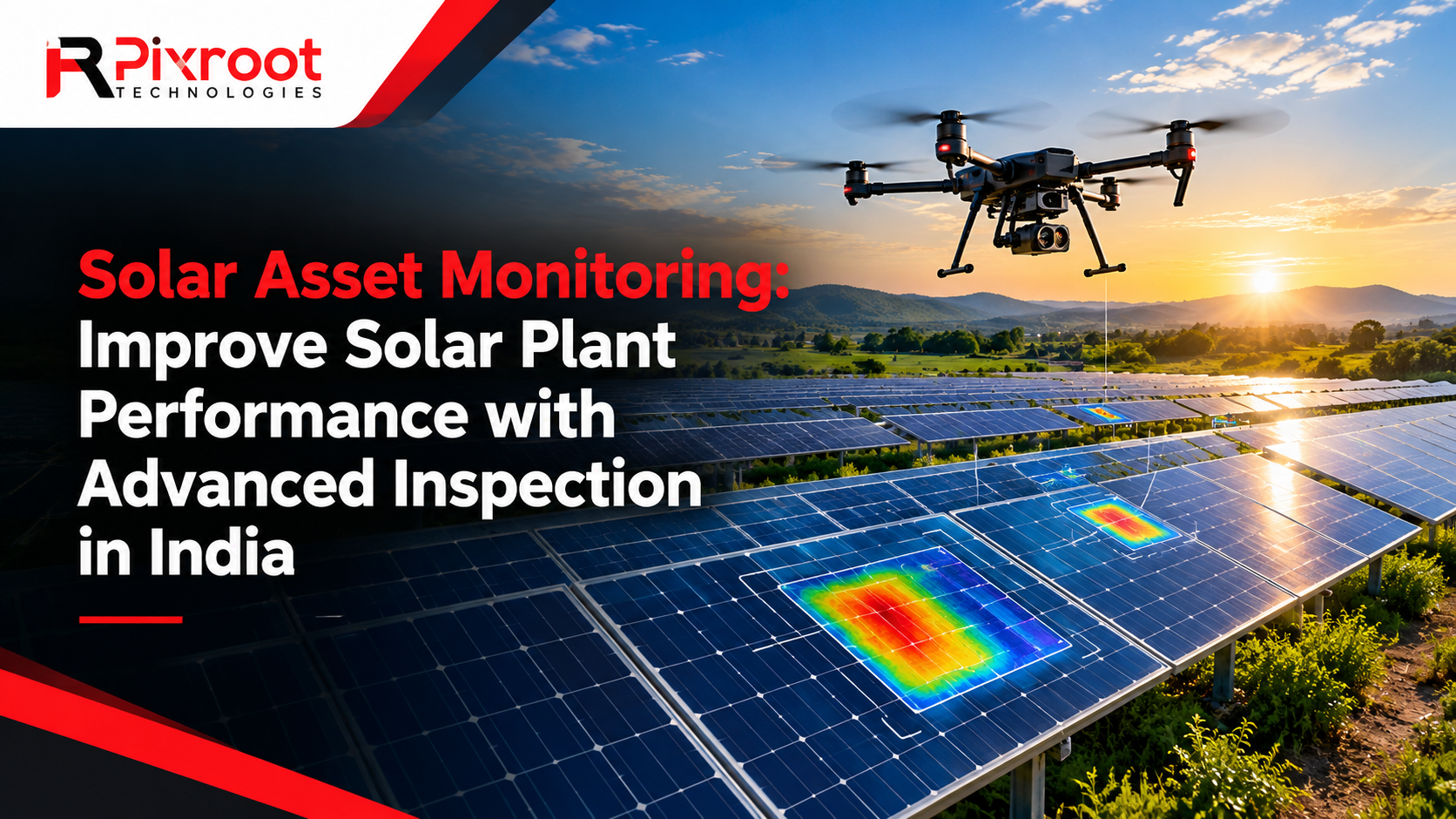
Solar power has turned out to be one of the rapidly growing renewable energy sources in India. With more solar farms and rooftop panels being installed, the management of thousands of panels has become quite challenging. Manual inspection is an expensive process, and does not always reveal problems with the panels.
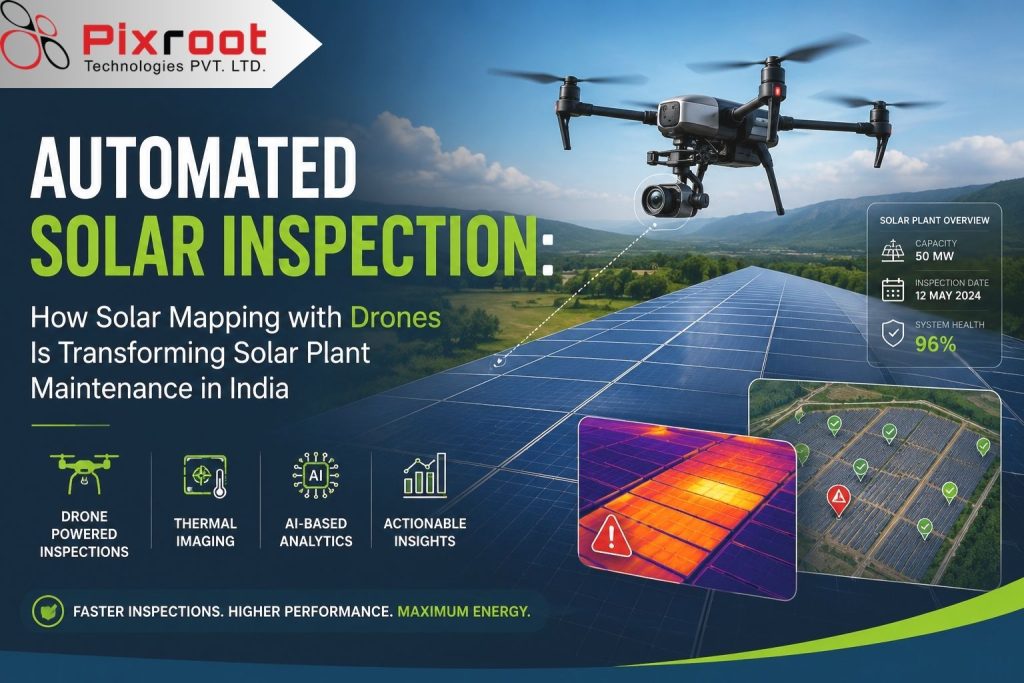
Automated Solar Inspection offers an alternative approach using drones, artificial intelligence, thermal imaging and mapping technologies to make the inspection process fast and accurate. Together with Solar Mapping with Drones, this technology allows asset owners to find faults, boost power generation, and save money on operation.
Regardless of whether you operate a utility scale solar field or commercial rooftop panel installation, automated inspection will help to enhance the performance of your facility and make sure of safe operation.
What Is Automated Solar Inspection?
Automated Solar Inspection is an example of an inspection system based on drones that allows assessing the condition of solar panels automatically.
As a result of such inspections carried out by drones, which collect both thermal and RGB images of the panels, the following issues can be detected:
• Hot spots
• Broken and cracked panels
• Dust accumulation
• Degradation of cells
• Loose electrical connections
• Shadow effect
• String failures
• Vegetation effect
All these problems can be found before they become serious faults.
How Does Solar Mapping with Drones Work?
Solar Mapping with Drones makes aerial maps of entire solar farms by using photogrammetry and GPS technologies.
The standard process is comprised of the following stages:
Flight Planning
Flight path planning guarantees full coverage of the solar farm.
Data Acquisition
A drone takes the following measurements:
• High-resolution photographs
• Thermal photography
• Coordinates (GPS)
• Elevation data
AI-based Analysis
Inspection software analyzes the results automatically and produces the detailed report.
Maintenance Planning
Maintenance specialists are provided with precise locations of faults.
Advantages of Automated Solar Inspection
Time-Saving
Large solar plants that used to take several days for inspection can now be checked within hours.
Higher Accuracy
Thermal camera reveals defects that manual check cannot.
Maximizes Electricity Generation
Defects detected in time help avoid efficiency issues and thus ensure higher energy production.
Reduces Maintenance Costs
Targeted maintenance reduces the number of activities performed for no reason.
Improves Worker’s Safety
No need for technicians to climb on rooftops or move around large solar power facilities anymore.
Effective Asset Management
Owners get an opportunity to follow the performance of panels thanks to historical data about inspections.
Why Drone-Based Solar Mapping is Indispensable Now
With the growth of Indian solar capacity, new inspection solutions become necessary.
Drones allow you to do:
• Accurate plant measurements
• Plant documentation
• Benchmarking of performance
• Monitoring of construction process
• Planning of maintenance
• Documentation for insurance purposes
• Help in complying with regulations
Applications for Various Solar Systems
Utility-Scale Solar Parks
Inspection processes will be faster, and fault detection is possible for thousands of panels.
Commercial Rooftop Solar
Businesses will spot damaged panels before the problem leads to reduced efficiency of the whole system.
Industrial Solar Plants
Factories will avoid downtime with proper preventive maintenance.
Solar Systems for Governments
Periodic inspections by drones will guarantee optimal operation of public infrastructure for years to come.
Technologies Employed by Automated Solar System Inspections
The latest inspection technology integrates several technologies into one.
Thermal Imagining
This technology detects heating of cells and electrical faults.
RGB Imaging
Used for identifying visible damage on panels and structural problems.
AI-Based Analyzers
Used to classify all faults and prioritize maintenance.
GPS Positioning
Determines the exact position of faulty panels.
Cloud Reporting
Helps teams work on inspection reports online.
Reasons Behind the Decision to Choose Drone-Based Solar Inspections in India
Some of the problems that can affect the solar energy generation in India include:
• Buildup of dust
• High temperatures
• Heavy rains
• Bird poop
• Growth of vegetation
Early detection and resolution of these issues ensure that the panels operate at maximum efficiency.
Automated solar inspection saves money on the operational cost and ensures optimal performance of the system.
Businesses running many solar energy generating plants will benefit from centralizing the process of inspection using drones.
Selecting the Best Automated Solar Inspection Services Provider
Some of the features to consider when selecting a services provider include:
• Compliance with DGCA regulations for drone operations
• Certified drone pilots
• Expertise in thermal imaging
• Use of automated inspection software with AI
• Inspection reports
• Timely delivery of the report
• Utility scale solar inspection experience
• Service across the nation
Experience in inspection will enable a service provider to give recommendations rather than pictures.
The Future of Solar Mapping by Drones
New developments in drone technologies in include:
• Artificial intelligence
• Machine learning
• Autonomous flights
• Digital twin
• Predictive maintenance
• Cloud
This will further enhance the speed of inspection, cut maintenance costs, and ensure maximum power generation in India’s fast-growing renewable energy industry.
Featured Snippet Answer
What is Automated Solar Inspection?
An Automated Solar Inspection is defined as an automated inspection of solar panels utilizing drones with thermal cameras, high-definition imagery, GPS mapping, and advanced analytics using Artificial Intelligence (AI). It is helpful in ensuring efficiency, cost savings, and optimization of the performance of solar panels.
Key Takeaways
• Automated Solar Inspection saves a great deal of time in inspection.
• Solar Mapping using Drones provides accurate aerial analysis of solar panel plants.
• Thermal Imaging helps detect faults that hamper power production.
• AI-based Reports make maintenance easier.
• Drones help inspection easier and more cost-effective.
• Preventive inspection helps improve the lifespan of solar assets.
Frequently Asked Questions
What is Automated Solar Inspection?
This is defined as an automated way of inspecting solar panels for any faults in their performance using unmanned drones, infrared thermography, GPS systems, and AI software.
How does Solar Mapping Using Drones assist?
It helps in creating an aerial map of solar farms using drones, which can be used by plant operators to spot damaged panels and plan for maintenance.
Is the use of drones in solar inspection reliable?
The use of drones in solar inspection is extremely reliable due to the use of high-resolution RGB cameras and thermography sensors.
How frequently should solar farms be inspected?
Most solar power plants need to be inspected once every three to six months.
Can drones inspect solar systems mounted on rooftops?
Yes. Drone inspections are suitable for rooftop, commercial, industrial, and utility-scale solar installations.