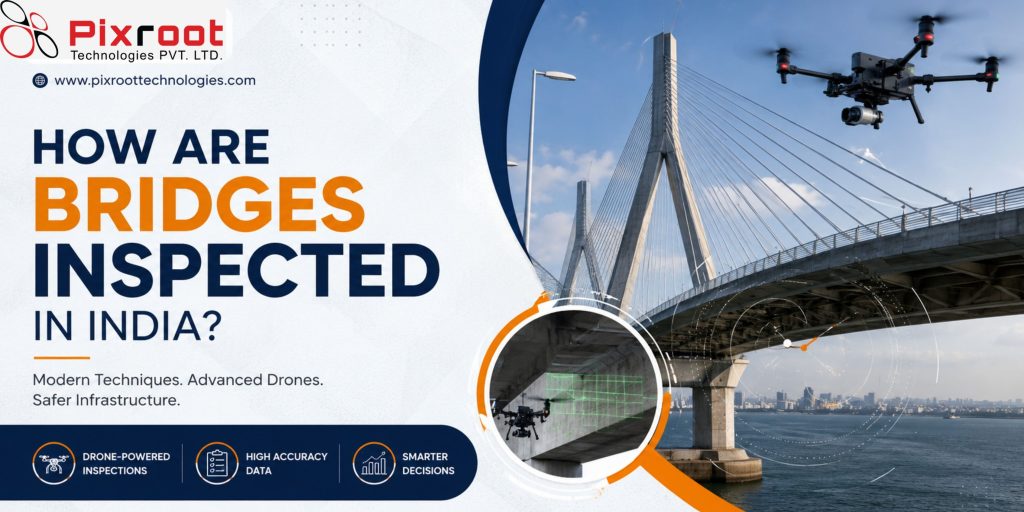
Bridges can be inspected using a range of techniques, including visual inspection, close access inspection, structural testing, monitoring technology and drone surveying.
The engineers look for the defects in the following critical parts of the bridges:
• deck
• girders
• bearings
• piers
• abutments
• expansion joints
The use of drones can speed up this process and allow to get images and videos of hard-to-reach places. However, the information obtained through drone inspections should not be considered automatically correct by the specialists who conduct bridge and structural inspections.
Efficient bridge condition assessment is crucial for India’s growing network of roads and railway infrastructure. The government guidance encourages periodic condition surveys and structural assessments, and the application of advanced monitoring technologies for the bridge infrastructure.
Why Regular Bridge Inspection Is Important
The bridges are exposed to the stress caused by traffic load, vibration, temperature fluctuations, rain, flooding, corrosion and other effects of the environment.
Periodic bridge inspections can help:
• to detect visible damage at the early stage
• to monitor crack propagation and deterioration
• to detect spalling of the concrete and exposure of reinforcement
• to assess the corrosion of steel components
• to inspect hard-to-access places under the bridge deck and around piers
• to prioritize maintenance and repair works
• to improve documentation and asset management
• to minimize unnecessary exposure of inspectors to hazardous locations
According to the MoRTH documentation, periodic assessment and condition surveys are an integral part of the bridge maintenance and structural assessment procedures. Existing distressed bridges may require supplementary tests depending on the bridge condition.
Inspection Of Bridges: What Are The Steps In Bridge Inspection
1. Planning And Reviewing The Existing Drawings Or Information Of The Bridge
Before the bridge inspection commences, engineers will have looked at the existing data of the bridge. This will provide a base from which the inspection will start. The team will then be able to focus on the critical areas.
What will the inspectors look for
Previous reports may help determine if there is any increase in the size of a crack or development of corrosion. This is especially useful if the previous report has mentioned some repair or issues of concern.
2. Visual Inspection Of Major Components Of The Bridge
Visual inspection will remain an essential aspect of bridge inspection. During the inspection, inspectors will be looking at the general state of the bridge and noting the defects.
Major areas for inspection include
Bridge Deck
Defects that inspectors will be looking out for may include cracks, any surface deterioration, potholes, water ponding and damaged expansion joints.
Girders and Superstructure
Engineers may inspect girders, trusses and other components of the bridge for cracking, corrosion, deformation and connection issues.
Bearings
Bearings are an important component since they help to accommodate movement of the bridge. Any damage to or restriction in their operation may impair the structure of the bridge.
Piers and Abutments
Here, inspectors will check for defects related to the concrete, cracking, any signs of erosion and scouring.
Underneath the Bridge
This will be one of the most difficult areas to reach during the inspection. Access through the conventional way may need special equipment such as scaffolding or mobile bridge inspection units. CSIR-CRRI reports that use of mobile bridge inspection equipment will allow easier access to the high-level bridge decks.
How Does Bridge Inspection Drone Work
A bridge inspection drone is an unmanned aerial vehicle fitted with different types of technology such as high-resolution camera, zoom camera or thermal sensor. The drone flies through the preset flight paths through selected parts of the structure.
Typical Inspection Process using a Drone
Flight Planning
The inspection team will identify the structure, parts, obstructions, hazards and data needed.
Data Acquisition
The drone will take photographs and videos of the structure at specified angles and distance.
Image Review
Data will be reviewed by qualified individuals who will identify any visible defects or parts which require close review.
Reporting
Any findings can be reported via inspection reports complete with images and observation locations.
India’s infrastructure industry has seen more use of drones in surveying and imaging activities. Previously, the NHAI made drone video recording a must for all stages of National Highway project works. India’s technical organizations have also developed guidelines on the use of drones for bridge inspections.
Advantages of Bridge Inspection using Drones
Access to Hard-to-Reach Locations
Drones can acquire visual data at high parts of the structure, under the bridge deck and other hard-to-reach locations.
Time Saving
Data acquisition from aerial means reduces the time taken to get visual data from selected areas of the structure.
Detailed Documentation
Clear photographic images and videos will serve as documentation that can be compared in future inspections.
Improvement in Safety Planning
Drone surveys will reduce the requirement of entering hazardous areas during the first visual inspection of the site.
Engineering Support to Maintenance
Combined with engineering skills, drone images will identify the parts needing further testing, inspections or repairs.
Can a Drone Fully Take the Place of Traditional Bridge Inspection?
No. This is an essential point.
A drone for inspecting bridges serves as a great visual tool for collecting data, but sometimes the inspection of bridges requires some other engineering techniques that a drone cannot do.
International guidelines for inspecting bridges also identify that while a drone is an excellent tool that could be used to supplement the inspection process, yet some tactile or physical examination techniques will still be needed for a comprehensive inspection.
Therefore, a combination of methods for bridge inspections would prove to be the most effective strategy including:
• Visual drone inspection
• Engineering inspection
• Close-up access inspection when needed
• Non-destructive testing
• Monitoring of the structure
• Further investigation of defects found
Bridge Inspection Drone Services for Infrastructure Projects in India
Drone technology may offer valuable visual information for surveys and bridge inspections to infrastructure project owners, contractors and managers.
However, a good professional service is not limited to flying a drone. Good bridge inspection requires proper mission planning, safe drone operations, adequate data capture, systematic reporting and analysis by qualified professionals.
Drone operations should also conform to relevant Indian regulations in aviation and operational aspects. The up-to-date information may be obtained from the Directorate General of Civil Aviation.
Why Choose Pixroot Technologies for Drone-Based Inspections?
Pixroot Technologies offers drone technology solutions for infrastructure inspection and survey services. In case of bridge-related projects, drone data collection may help stakeholders get detailed visual information about complex and hard-to-reach bridges.
Professional value of an inspection process is achieved by the right drone technology combined with proper planning and data collection and reporting.
If you need to inspect the conditions of your bridges within an infrastructure project in India, consider the Bridge Inspection services provided by Pixroot Technologies.
Key Takeaways
• Bridge inspections include visual inspection, close access inspection, testing and structural monitoring.
• A bridge inspection drone helps collect high-resolution data from hard-to-access areas.
• Drone technology enables better access, documentation and bridge inspection process optimization.
• Imagery captured with drones needs to be evaluated as part of an inspection process.
• The suspected defects need further examination and testing to confirm their nature.
• India’s road infrastructure industry is increasingly using modern technologies such as drones and monitoring systems.
Frequently Asked Questions
How are bridges inspected?
Bridges are inspected using visual evaluation of bridge structure components like decks, girders, bearings, piers and abutments. Inspectors assess any damage, corrosion, spalling, deformation, water-related problems, etc.
What is a bridge inspection drone?
Bridge inspection drone is an unmanned aerial vehicle (UAV), which helps capture images, videos and other inspection data from bridges.
Can drones inspect underneath bridges?
Yes. There are ways how drone inspection systems and techniques can help capture imagery from selected bridge underside areas. However, many aspects need to be considered such as environmental factors, limitations related to GPS system usage, obstacles and other things.
Can a drone detect cracks in bridges?
If there is a high-resolution camera, then there might be some possibility to capture visual cracks based on several factors such as crack size, image resolution, distance and light level.
Are bridge inspection drones used in India?
Yes. Drones are increasingly used for surveying, monitoring and other infrastructure-related tasks in India, as well as for traditional inspection and engineering processes. Government bodies also promote the usage of drones for monitoring National Highway project implementation.
Is a drone inspection enough to certify a bridge as safe?
No. The data captured with drones is only one of the possible sources of data. Evaluation of bridge safety and its structural capacity requires engineering evaluation and possibly inspection and testing.
Conclusion
So, what are bridges inspected for? The modern answer would be that bridge inspection process combines traditional engineering knowledge and modern technological solutions. Visual inspection, close access inspection, testing and monitoring are still necessary, while a bridge inspection drone can make access to visual data easier.
The optimal solution for infrastructure projects in India is not about replacing traditional inspections with drones. It is about intelligent integration of drone technology into the inspection process to achieve better access, documentation and engineering results.