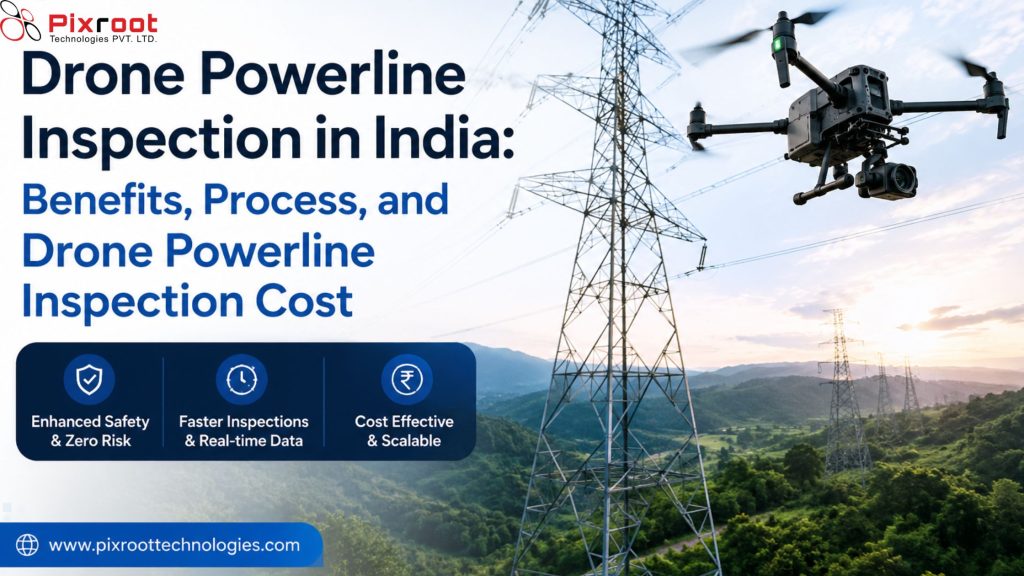
The power transmission and distribution system constitutes the backbone of any infrastructural development within India. Periodic checking of the powerlines is essential to maintain consistency, minimize blackouts, and enhance safety. However, following the traditional approach for such an activity could prove to be cumbersome and risky for the technicians employed on-site. Droning of the powerline has proven to be revolutionary in the utility industry.
Utilizing the highly advanced drones that contain highly sensitive cameras and thermal imaging sensors, coupled with AI technology, makes the task of inspecting the powerlines quite easy.
This guide takes you through all aspects of drone powerline inspection, its advantages, and the key considerations regarding the Drone powerline inspection cost in India.
What Is Drone Powerline Inspection?
A drone powerline inspection refers to the process of using UAVs to inspect power transmission infrastructure. Drone inspection involves capturing visual and thermal images of the various components of an electrical system including power lines, poles, towers, insulators, conductors, and other relevant assets.
The data captured is used to determine:
• Damaged conductors
• Faulty insulators
• Corrosion and rust
• Vegetation encroachment
• Loose fittings
• Hot spots on the system
• Structural defects
Reasons why Power Utilities in India Use Drones for Their Inspection Operations
The country’s power grid covers several thousand kilometers of diverse terrain making manual inspection difficult.
Advantages of Using Drones for Power Line Inspection
Enhanced Safety
Power line inspection involving transmission lines may be dangerous as people might come into contact with hazards. However, drones offer a safe alternative since they don’t require climbing.
Fast Data Collection
Drones provide faster power line inspection as compared to traditional manual approaches.
Detailed Asset Monitoring
Through advanced sensor technology, drones provide detailed pictures which aid in identifying issues early enough.
Minimized Outage Risks
Preventive maintenance ensures power utilities reduce unexpected downtimes.
Cost-Effective
Companies benefit from savings made when using drone inspections compared to those of helicopters.
Process of Drone Powerline Inspection
Flight Mission Planning
This phase involves planning of flights using GIS mapping and utility asset data.
Drone Data Collection
Drone inspection involves the use of specialized drones flying through power line corridors collecting:
• RGB imagery
• Infrared images
• LiDAR (when necessary)
• Video Documentation
Data Processing and Analysis
The gathered data is analyzed through AI and machine learning to find anomalies or defects.
Inspection Report
Report containing
• Location of defects
• Temperature readings
• Condition of equipment
• Maintenance suggestions
This helps the utility operator manage the repair process more effectively.
Drone Powerline Inspection Cost in India
One of the first queries that utility organizations usually raise is: What is the Drone powerline inspection cost?
There can be many factors that determine the price.
Factors Determining Drone Powerline Inspection Price
Length of Transmission Network
A network that needs long routes requires more time and resources to inspect.
Nature of Infrastructure
The inspection cost could be different for:
• Transmission lines
• Distribution lines
• Substations
• Solar evacuation lines
Nature of Sensors
Visual survey cost is usually lower than that for thermal or LiDAR sensor survey.
Reporting Requirements
Analytics, intelligent fault detection from AI, and digital asset management integration can impact the cost of the projects.
Common Cost Ranges
For drone inspections in India, most projects have prices that are:
• Based on kilometers of coverage
• Number of assets
• Type of sensor needed
• Project complexity
Professional services providers normally provide custom quotation for their services based on the purpose of the inspection.
Problems Detected by Drone Inspections
With the help of drones, utilities have been able to detect important issues such as:
• Broken insulators
• Flashovers
• Damaged conductors
• Corrosion of tower parts
• Loss of hardware
• Tree proximity
• Thermal hot spots
• Safety hazards
These can minimize the need for costly repairs.
Why Should You Partner with Pixroot Technologies for Drone Inspections?
Pixroot Technologies offers cutting-edge drone inspection solutions suited for the needs of India’s utilities.
Specialized in Utilities
They have vast experience with the needs of the utilities’ inspection purposes.
State-of-the-Art Drones
Advanced drone technology used includes thermal imaging cameras and sensors.
Report Creation
Clients are offered practical reports complete with photographs of the faults detected.
Compliance with Regulations
Drone inspections strictly adhere to all regulatory requirements in the industry.
Featured Snippet: What is Drone Powerline Inspection?
The process of drone powerline inspection is conducted by use of drones equipped with cameras and sensors to conduct inspection on power transmission and distribution lines. This guarantees safety, timely inspection processes, reduced costs of operations, and early detection of potential failures that may cause power outages.
Featured Snippet: What is the Price of Drone Powerline Inspection in India?
Drone powerline inspection prices in India differ depending on the length of the transmission lines to be inspected, topography of the site, complexity of the inspection process, and the sensors required.
Frequently Asked Questions (FAQs)
Is Drone power line inspection safer compared to manual inspection?
Yes. Drones reduce the need for conducting manual inspections at height levels and near live systems.
Can drones inspect high-voltage transmission lines?
Yes. Certain drones are designed to undertake inspection of high-voltage transmission lines.
What kind of data is captured by drones during inspections?
Data collected includes RGB imaging, thermal imaging, videos, LiDAR mapping, and geospatial data.
How often should one examine power lines?
The answer to this question varies due to different aspects such as legal requirements, environmental considerations, and asset value. Most organizations perform inspections twice a year.
Does thermal inspection make the process more accurate?
Absolutely. Thermal scanning helps find hotspots and other issues with electricity.
What affects the cost of Drone powerline inspection?
Several factors affect its cost such as network size and complexity, geographical location, sensors being used, and reporting requirements.